Kane & McHenry County
Bats in the house or attic? Here's what Illinois law allows.
Every bat in Illinois is protected. A colony in the attic is excluded, not trapped or killed, and only at certain times of year. A single bat in your living space is a different situation, and it may be a health question first.
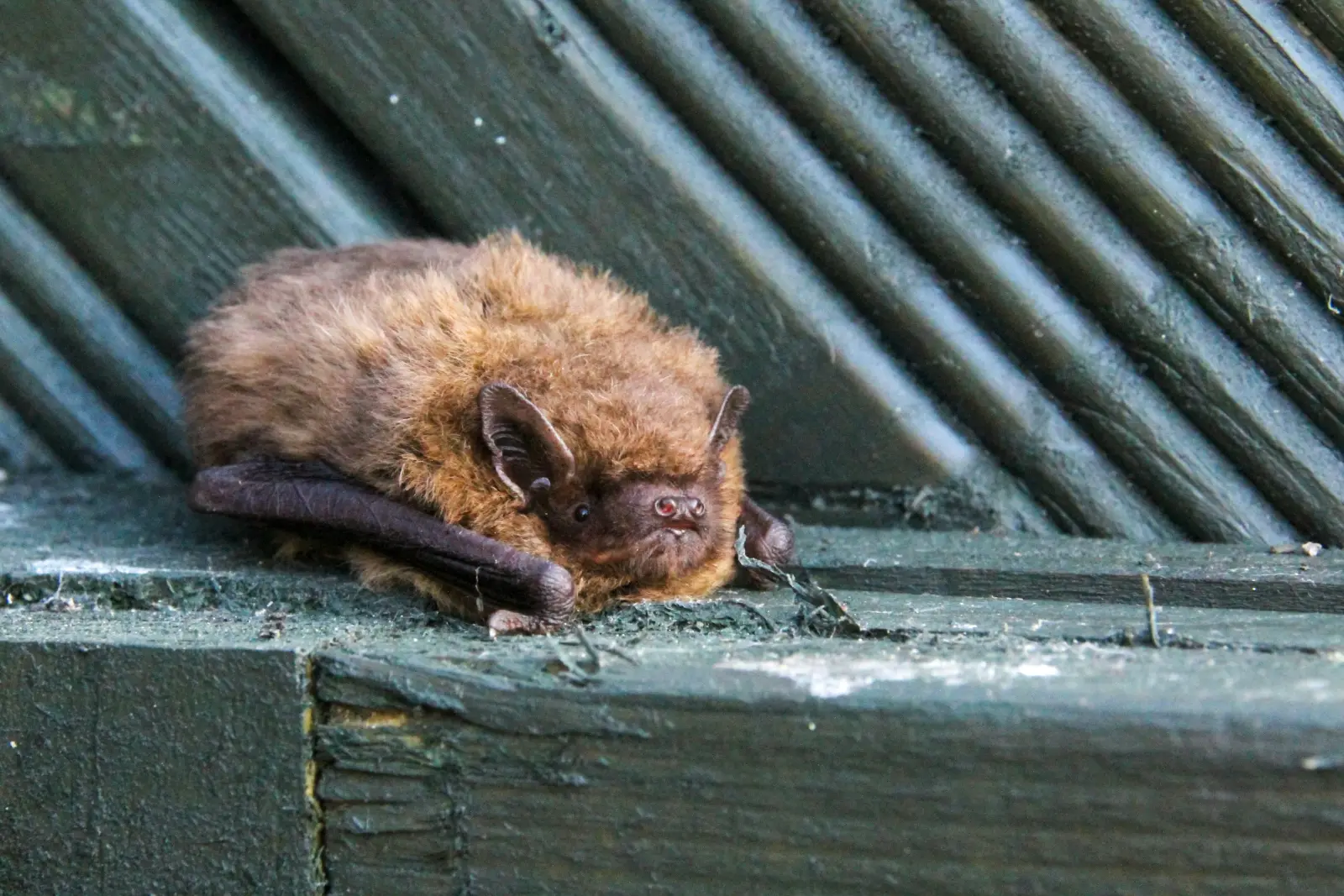
Bat in a room where someone was asleep, or near a child? Don't let it go and don't damage its head. Call your doctor or the county health department. It may need testing.
McHenry County Animal Control: 815-459-6222. Kane County Animal Control: 630-232-3555.
One bat loose in the house: what do I do?
- If anyone could have been touched (a bite, a scratch, contact with bare skin, or a bat where someone was sleeping), keep the bat and call the health department before doing anything else.
- Any other bat in the house: close it into one room with a window, and keep people and pets out. Call your county health department before you let it go. The Illinois Department of Public Health says not to release a bat until you've spoken with them. Bat bites are small and easy to miss.
- If the health department says no one was exposed, open the window, remove the screen, leave the room and give the bat time to fly out. Don't swat it out of the air.
- Never touch a bat bare-handed. A bat on the floor, out in daylight or unable to fly is more likely to be sick.
How do I know there's a colony in the attic?
- Insulation muffles bats, so you may hear only faint chirps or small rustling, or nothing at all.
- Watch the roofline from about half an hour before sunset until dark and count what comes out.
- Look for dark smudges around a small gap near the roofline. Bats fit through openings about a quarter inch wide.
- Bat droppings pile up under the roost and crumble into shiny insect bits. Don't sweep them up: the dust can carry the fungus that causes histoplasmosis.
When can bats be excluded in Illinois?
| Dates | What's allowed |
|---|---|
| March 15 to May 15 | Permanent eviction, when dusk temperatures are forecast above 50°F for at least two nights in a row |
| May 16 to August 4 | Maternity season. Young can't fly, so eviction is restricted |
| August 5 to October 30 | Permanent eviction, once young can fly, when dusk temperatures are forecast above 50°F for at least two nights in a row |
| October 31 to March 14 | Restricted; bats may be hibernating |
Source: 17 Ill. Adm. Code 525.55 and Wildlife Illinois. Outside the open windows, eviction needs IDNR authority and specific conditions.
How does bat exclusion work?
Bats are let out and not let back in. A licensed operator finds the gaps the colony uses and, in an open window, lets the bats leave and seals the way in so they can't return. Three Illinois bat species (the Indiana, gray and northern long-eared bats) are federally endangered, which is one more reason the work follows the rules.
Questions people ask
When can bats be removed from an attic in Illinois?
Under Illinois rules, a bat colony can be permanently evicted from March 15 to May 15 and from August 5 to October 30, when dusk temperatures are forecast above 50 degrees for at least two nights in a row. From May 16 to August 4 the young can't fly yet, and eviction is restricted.
I woke up and there was a bat in my bedroom. What do I do?
Don't release it, and don't damage its head. The Illinois Department of Public Health says to consult a doctor or the local health department if you wake to find a bat in your room, or find one in the room of an unattended child or near someone who can't say whether they were touched. The bat may need to be tested for rabies.
Do most bats have rabies?
No. Wildlife Illinois reports that 3 to 5 percent of bats tested each year in Illinois have rabies. But bats are the main source of rabies in Illinois, so any possible contact matters. Never touch a bat bare-handed.
Can I seal the holes myself?
Homeowners can evict bats themselves if they follow the Illinois rules on timing. Sealing during the maternity season can trap flightless young inside, where they die. A licensed operator knows the rules and the methods.
Related: noises in the attic · after-hours help